Running With Your Dog: How to Build a Safe Dog Running Partner + Strength Exercises

A simple, age-by-age guide to running with your dog—plus conditioning and core exercises to prevent injury and build endurance.

There’s something ridiculously satisfying about a dog who can trot next to you like they were born for it—loose leash, happy grin, matching your pace. Personally, I LOVE running with my dogs, even just on my farm. It is so satisfying and fun. But the best canine running partners aren’t made by pushing distance fast. They’re built the same way great human runners are built: gradually, with smart conditioning, strength work, and joint care.
Below is a simple, practical roadmap you can follow—organized by ages & stages, with appropriate difficulty and distances, plus strength exercises and joint-support tips.
Before You Start: The Safety Checklist
1) Vet check first (especially for new runners).If your dog is overweight, previously injured, or you’re planning to run regularly, get a quick “sports clearance” from your vet.
2) Growth plates matter (puppies are not tiny marathoners). High-impact repetitive running on pavement before maturity can stress developing joints. Puppies can do lots of movement—just not structured distance running.
3) Choose the right gear.
A front-clip harness or running harness often beats a collar for sustained running.
A hands-free leash can be great if your dog already has leash skills.
Avoid retractable leashes for running.
4) Watch surfaces and weather.
Pavement = more impact. Trails/grass = friendlier.
Heat is sneaky. Dogs overheat faster than humans.

Ages & Stages: Running With Your Dog Starts By Building a Strong Foundation
Stage 1: Puppy Foundation (8 weeks–6 months)
Goal: Confidence, body awareness, leash skills, and “runner manners”—not mileage.
What’s appropriate:
Short “training strolls” and sniff walks
Tiny bursts of fun movement (on grass), lots of breaks
Exposure to joggers, bikes, strollers, sounds, and new places
Distance idea:Think minutes, not miles: 5–15 minutes total “out and about,” with plenty of stops.
Skills to teach now (these matter later):
Loose leash walking (the #1 running skill)
Check-in (eye contact on cue)
Leave it (squirrels are not your coach)
Side position cue: “With me” or “Let’s go”
Start/stop cues: “Run!” and “Easy/Walk”
Stage 2: Pre-Runner Conditioning (6–12 months)
Goal: Controlled movement, endurance basics, and continued joint protection.
What’s appropriate:
Longer brisk walks
Short jog intervals on softer surfaces
More structured leash practice (passing people/dogs calmly)
Distance idea:Start with walk/jog intervals 2–3x/week:
Example: 1 minute jog + 2–3 minutes walk, repeat 4–6 times
Total time: 15–25 minutes
Rules for this stage:
Keep it easy pace (your dog should look relaxed)
Avoid repetitive distance on pavement
No hard sprinting, no forced pace
Tip: Some dogs mature later (large breeds especially). When in doubt, keep running “light and playful” until your vet says joints are ready.
Stage 3: Young Adult Runner (12–18 months+)
Goal: Build a real running base safely.
Most dogs can begin running more consistently after physical maturity, but maturity varies by breed and size. Once you’re cleared, use a simple progression. Running with your dog is not hard; it just needs a thoughtful plan.
Beginner plan (3 runs/week):
Week 1–2: 10–20 minutes easy jog (or intervals)
Week 3–4: 20–30 minutes easy jog
Week 5–6: Add small distance increases (keep it easy)
Distance guideline (simple and safe): Increase total weekly running time/distance by about 10% or less if your dog is recovering well. If you see soreness, stiffness, or reluctance—hold steady or back off.
Signs you’re progressing too fast:
Lagging behind or stopping unexpectedly
Limping or “bunny hopping.”
Excessive paw wear, licking feet, or cracked pads
Stage 4: Experienced Running Partner (18 months+ with a solid base)
Goal: Maintain fitness, prevent injury, and keep it fun.
What’s appropriate:
Regular easy runs
Occasional longer runs (if your dog enjoys them)
Trails, varied terrain, and controlled speed changes
Reality check: Not every dog wants long distances. Some dogs thrive at 2–4 miles, and that’s their sweet spot. Your win is a happy, sound dog, not a Strava trophy.

Joint Care: Essential for Running With Your Dog
Running is impactful. Even with good conditioning, joint care is part of the deal.
Smart joint-friendly habits
Warm up: 5–10 minutes brisk walk before jogging
Cool down: 5–10 minutes easy walk after
Prefer softer surfaces when possible
Keep nails trimmed and paws conditioned
Maintain a lean body condition (extra weight is extra joint stress)
Supplements: what people commonly use
Always talk to your vet—especially if your dog is young, on meds, or has a history of orthopedic issues. That said, common joint-support options include:
Omega-3 fatty acids (EPA/DHA): support inflammation and joint comfort
Glucosamine + Chondroitin: commonly used for cartilage support
MSM: often paired with joint formulas
Green-lipped mussel: popular for joint mobility support
Type II collagen: sometimes used in joint protocols
Important: Supplements are not magic. They work best when paired with: smart training, strength work, good surfaces, and a healthy weight.
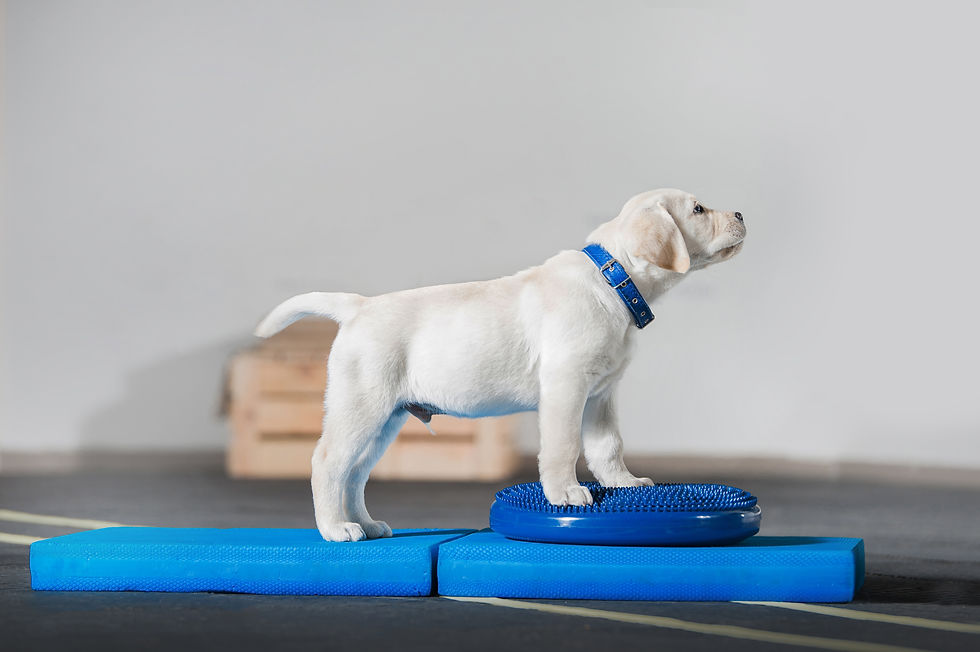
7 Dog Exercises for “Core Training” to build before, during, and after running with your dog.
Just like humans, dogs need strength and stability to run well. Strong muscles protect joints, improve stride efficiency, and reduce the risk of injury.
You don’t need a dog gym. You need 5–10 minutes, 3–5 days/week.
But if you and Amazon are besties, then check our shopping list here: Dog Fitness Favs
Here are 7 simple exercises for your dog- try one each day of the week.:
Simple strengthening exercises (pick 3–5)
1) Sit-to-stand reps (dog squats)
5–10 reps, slow and controlled
Builds rear-end strength and stability
2) Down-to-stand transitions
3–8 reps
Great total-body control
3) Cavaletti poles (or broomsticks on books)
Slow stepping over low obstacles
Builds coordination, shoulder/hip stability, and body awareness
4) Backing up (reverse walking)
5–15 steps at a time
Excellent for core + rear-end engagement
5) Cookie stretches (weight shifts)
Lure nose to shoulder/hip gently
Encourages controlled core movement
6) Balance work (low-risk version)
Stand on a folded towel, then progress to a cushion, or purchase a yoga balance cushion/pillow
10–20 seconds, 2–4 rounds
Great for stabilizer muscles
7) Hill walking (the easiest “strength run” ever)
Walk hills instead of sprinting them
Strengthens without pounding
Weekly strength idea:
2–3 days/week: strength mini-session (5–10 minutes)
Run days: keep strength light or do it on non-run days
Teaching “Runner Manners” (So You Don’t Get Dragged)
A good running partner is mostly training, not fitness.
Cues that make running smoother:
“Let’s go” = start jogging
“Easy” = slow down
“With me” = run at your side
“Leave it” = ignore distractions
“Stop” = freeze/stop at curbs and crossings
Golden rule:If leash skills are messy at a walk, they’ll be a disaster at a run. Fix the walk first.

A Sample “First Month” Plan (Adult Dog, Vet-Cleared)
Week 1: 3 runs
5 min walk warmup
10 min easy jog (or 1 min jog/2 min walk x 4)
5 min cool down
Week 2:
Add 5 minutes total (or one extra interval)
Week 3:
20–25 minutes total easy running time
Week 4:
25–30 minutes, still easy. Add 1 short strength session on two non-run days.
If your dog looks stiff or tired: hold the same workload for another week.
The Goal: A Happy Dog Who Wants to Go Again Tomorrow
The best running partner is the dog who finishes the run thinking, “That was fun—when are we doing it again?”
Build the foundation, protect the joints, add strength, progress slowly… and you’ll have a dog who can run with you for years instead of weeks.
If you want, tell me your dog’s age, breed/size, and your current running pace/distance, and I’ll map this into a simple 8-week plan you can follow.
Is this conversation helpful so far?
.
.
.
.

