Pond and Creek Safety for Aussies: Germs to Watch For, Vaccines, and Training Tips

Spring is here!!! Finally. Let's be real- you want to have fun with your Aussie without becoming a paranoid, helicopter pet parent. LOL
And if you live with an Aussie, you already know they are rarely content to just admire the water from a distance. So what is one to do? Freak out and vaccinate to the hills, stay at home, or just let it go?
Here's a simple breakdown of OPTIONAL vaccines that some vets suggest, and others say, it's your choice. As well as a list of training tips that are realistic for you and your furball before you hit the creek.
Here is what to know about pond and creek safety for Aussies, including the most important germs and diseases to watch for, vaccinations to consider, and training to teach your pup before spring water adventures.

Germs and diseases to watch for around ponds and creeks
Leptospirosis
This is the big one. Before I give you the official breakdown, I will be real- the vaccine is much like getting the Flu vaccine. It covers some, not all, and is ever-changing. Some don't bother, some do. It is a choice. But the struggle is that your dog cannot speak English and tell you if they are getting sick.
Leptospirosis is a bacterial disease that dogs can get through exposure to contaminated water or soil, often from the urine of infected wildlife, rodents, livestock, or other animals. The bacteria can persist in water or soil for weeks to months, and the CDC says almost every dog is at risk. Dogs that roam outdoors or have access to contaminated water sources are at higher risk.
This makes leptospirosis especially relevant for dogs who:
play in ponds or creeks
hike near wet or muddy areas
explore ditch water, marshy ground, or stagnant puddles
spend time in areas with wildlife activity
Possible signs can include vomiting, lethargy, fever, reduced appetite, and increased thirst, though symptoms can vary. It can become serious quickly because it may affect the kidneys and liver, and it can also infect people.
Giardia
You can get this in your backyard, a neighborhood sidewalk, or a local park.
We had a flock of birds that found our backyard bushes lovely during the cold winter months... they pooped EVERYWHERE, and my dogs wanted to lick it up. Gross, I know-- But it was maddening. As a result, we supported our local vet with an enormous amount of meds for our pack, and I, Jill, took matters into my hands. I grabbed the chainsaw and chopped those bushes right to the ground. The stumps are still there by my back porch- LOL. Bye-bye, birdies.
Giardia is a parasite spread through fecal contamination in the environment. Dogs may be exposed through contaminated water, muddy areas, or by licking contaminated paws and coat after an outing. CAPC includes Giardia among the parasites veterinarians monitor and recommends testing based on risk and lifestyle.
Possible signs include:
soft stool
diarrhea that comes and goes
mucus in stool- comes out after the poo, a blob of goo
gas
stomach upset
poor weight gain in some dogs
Not every exposed dog gets sick, but it is definitely one to keep on your radar for adventurous spring dogs.
Harmful algae
Some ponds and slow-moving water can develop harmful algal blooms. EPA guidance warns that these blooms can produce dangerous toxins that can sicken or kill pets. Water may look green, blue-green, brownish, scummy, foamy, or smell bad. If you think your dog was exposed, rinse them immediately with clean water and get veterinary help right away if symptoms show up.
This is one area where I would not casually “wait and see.”
If the water looks suspicious, skip it.
Tick exposure around creek banks and brush
The danger is not always in the water itself. Brushy creek edges, wet grassy areas, and wooded banks are prime tick territory. CAPC recommends annual testing for tick-transmitted pathogens in dogs, especially where these diseases are endemic or emerging, and AAHA lists Lyme vaccination as a lifestyle- and geography-based noncore option.
So while Lyme is not a “water disease,” spring creek outings often go hand in hand with higher tick exposure.

Vaccinations to consider before the spring pond and creek season
Leptospirosis vaccine
For a dog that enjoys ponds, creeks, trails, muddy areas, or outdoor adventures, this is the first vaccine I would discuss with your veterinarian. HONEST TRUTH- this vaccine can be HARSH, so it is my sole opinion (I am not a vet) that you should give this vaccine ALONE and not alongside any other vaccines, worm treatments, or surgeries.
Additionally, it can be "too much: for smaller dogs, so waiting until they are over 15 pounds and more mature is helpful.
(The official blurb- The CDC confirms a vaccine is available in the United States. AAHA’s vaccine guidance is risk-based, and in 2024 AAHA highlighted the ACVIM consensus statement recommending that leptospirosis vaccination be given annually to all dogs starting at 12 weeks of age, regardless of breed.)
Lyme vaccine
Lyme vaccination is more dependent on where you live and where you travel, but it is worth discussing if your dog spends time on wooded trails, in tall grass, or in tick-prone areas. AAHA classifies Lyme as a noncore vaccine recommended for some dogs based on lifestyle, geography, and risk of exposure.
Honestly, if you are consistent with flea and tick prevention, then clearly you would not need a vaccine.
Routine parasite prevention
Not a vaccine, but still part of the conversation. Outdoor dogs need a prevention plan that fits their real lifestyle, not just an occasional guess. CAPC recommends regular veterinary exams and parasite testing guided by risk.

Training to teach your Aussie before pond and creek fun
Aussies do best when freedom is built on skills.
Before letting your pup go full spring adventure mode, I would work on these training basics first.
1. Recall- or a long line leash.
This is your number one safety skill.
If the water is deeper than expected, the current is stronger than it looks, another dog appears, or you spot algae, wildlife, or debris, you need your dog coming back immediately.
A “mostly comes” recall is not enough around water.
2. Leave it or Drop
This cue matters so much for outdoor dogs.
Use it for:
dirty standing water
dead fish
animal waste
algae
trash
muddy mystery objects on the bank
For a spring creek dog, “leave it” is not optional. It is practical safety.
3. Wait at the water’s edge
I love a pause before permission.
Teaching your dog to stop and wait at the edge of the pond or creek gives you a second to scan the environment before they launch in.
That quick pause lets you check for:
suspicious water color
current
steep drop-offs
slippery mud
debris
difficult exits
4. Controlled entry and exit
Not every dog that loves water is actually skilled in water.
AKC recommends introducing dogs gradually, using calm water and a gentle slope when possible, and making early swim experiences positive and controlled.
A dog should know how to:
enter without panicking
turn back toward you
locate an exit point
come out when called
avoid scrambling up unsafe muddy banks
5. Settle after excitement
This matters more than people think.
Aussies can get wound up fast. After a splash session, your dog should be able to regroup, come out of the water, and settle. That reduces frantic behavior, poor choices, repeated water gulping, and reckless re-entry.
The off switch is part of safety, too.
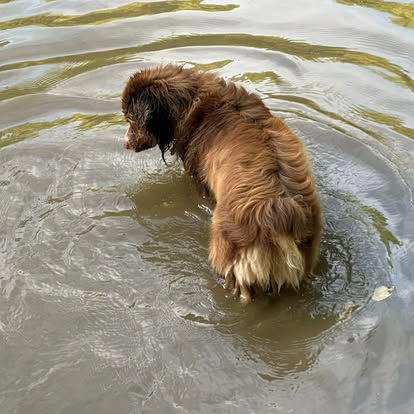
Practical pond and creek safety tips for Aussies
Bring fresh drinking water from home so your dog is less tempted to drink from ponds or creeks. The CDC specifically advises avoiding contaminated water and not allowing pets to drink it.
Choose cleaner-looking moving water over stagnant water when possible. Standing water and muddy, pooled areas pose greater concern for contamination. This is an evidence-based caution drawn from CDC leptospirosis guidance about contaminated water and from EPA’s harmful-algae advice.
Do not allow swimming in water that looks green, scummy, foamy, or foul-smelling.
Rinse your dog off after pond or creek play, especially if the water was muddy or questionable. This helps remove residue before your dog licks their coat and is specifically (recommended by EPA in suspected algae exposure)
Check ears, paws, belly, and coat after outings. This is a practical grooming and tick-check step supported by the known increased exposure risk around brushy outdoor areas.
Keep up with routine vet care and fecal testing, especially for puppies and highly active outdoor dogs. CAPC recommends parasite testing and preventive care guided by lifestyle and exposure.
When to call your vet after pond or creek exposure
Call your veterinarian promptly if your dog develops:
vomiting
diarrhea
weakness
lethargy
fever
reduced appetite
increased thirst
staggering
drooling
breathing difficulty
sudden illness after suspicious water exposure
EPA specifically advises immediate veterinary care for symptoms after possible harmful algae exposure, and CDC guidance supports prompt attention for dogs showing signs consistent with leptospirosis after exposure risk.
Spring fun, with smart preparation
Your Aussie does not need a boring life to be safe.
They just need a prepared owner.
Spring pond and creek adventures can be wonderful for Mini and Toy Aussies. The key is going in with good habits: smart vaccine conversations, solid parasite prevention, fresh water on hand, and training that gives your dog more freedom because they have earned it safely.
That is the sweet spot.
Adventure, with wisdom.
.


